
Meggie M. Art
A portfolio and commission website for an independent fantasy illustrator, combining an artwork-led interface with a CMS she can manage herself.
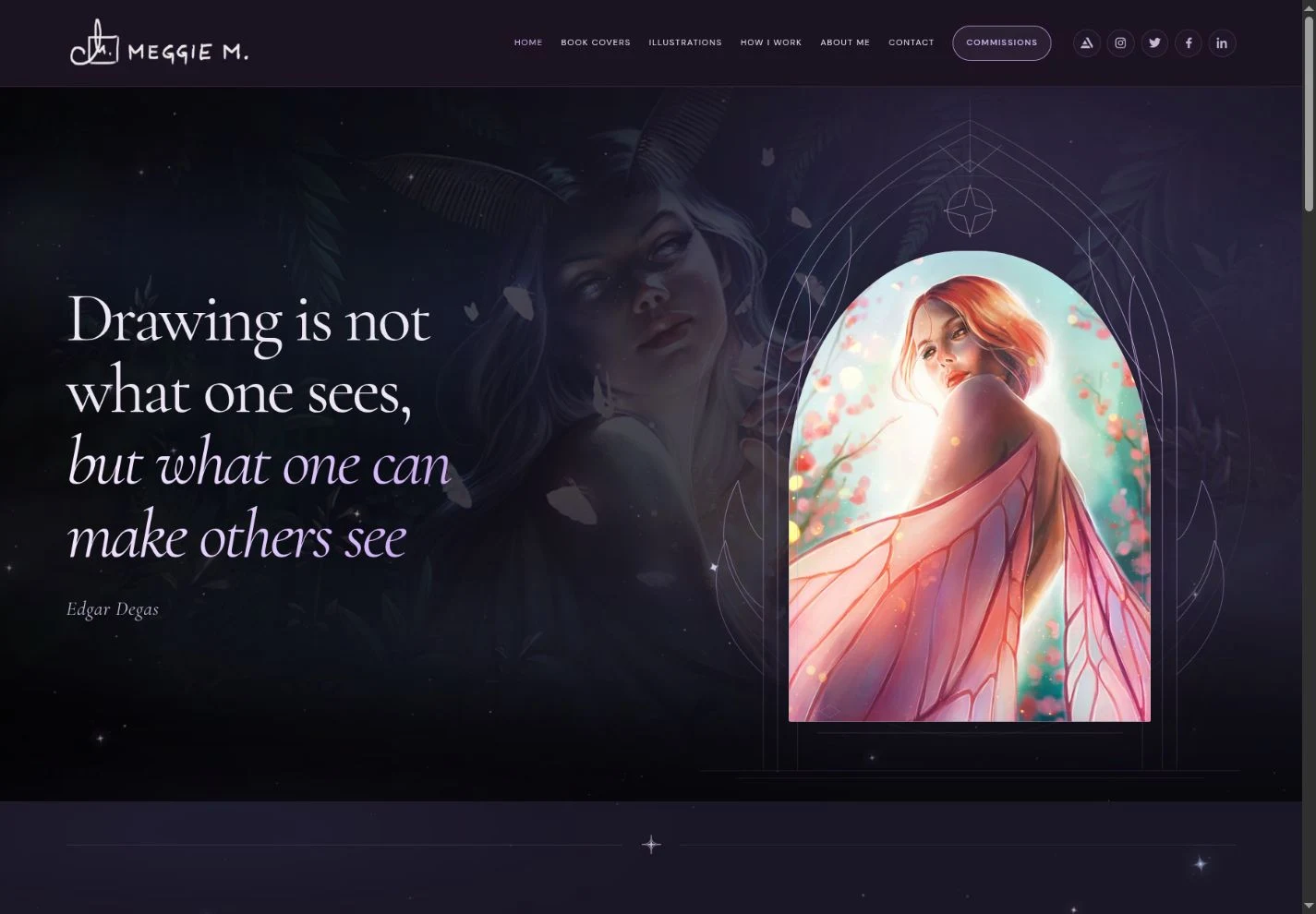
A website built around an illustrator's work
A portfolio and commission website for independent fantasy illustrator Meggie M. I designed and built the responsive interface, artwork galleries, Payload CMS, and deployment, giving her a place to present her illustrations and book covers and manage new work herself.
- Next.js
- React
- TypeScript
- PostgreSQL
- Tailwind
The person behind the website
Meggie M. is an independent illustrator creating fantasy art, book covers, dust jackets, endpapers, and character illustrations. I built this website for my wife to present her work and help prospective clients understand her services. She created the illustrations and visual artwork shown throughout the site; my contribution is the website design, implementation, content management, and deployment.
My contribution
I worked across the public interface and the administration behind it, turning the illustrator's needs into a working Next.js and Payload CMS application. The project connects artwork presentation with the practical work of maintaining a portfolio and directing people toward a commission enquiry.
- Designed and implemented the responsive website around her existing artwork and original wordmark
- Built separate galleries for illustrations and book cover projects, with individual artwork pages and a lightbox
- Configured CMS collections for artwork, categories, images, project galleries, and publication status
- Added editable website copy, SEO fields, ordering, and controlled appearance settings
- Connected PostgreSQL and media storage, with migrations and content publishing workflows
- Deployed the application and configured metadata, sitemaps, and legacy WordPress redirects
Letting the artwork lead
The public site uses a dark, literary visual language with restrained ornaments and typography. Large images and layouts that respect their proportions let visitors see the illustrations rather than a repeated grid of cropped thumbnails. Book covers and standalone illustrations have separate galleries, while project pages connect the finished piece to related images and available process material.
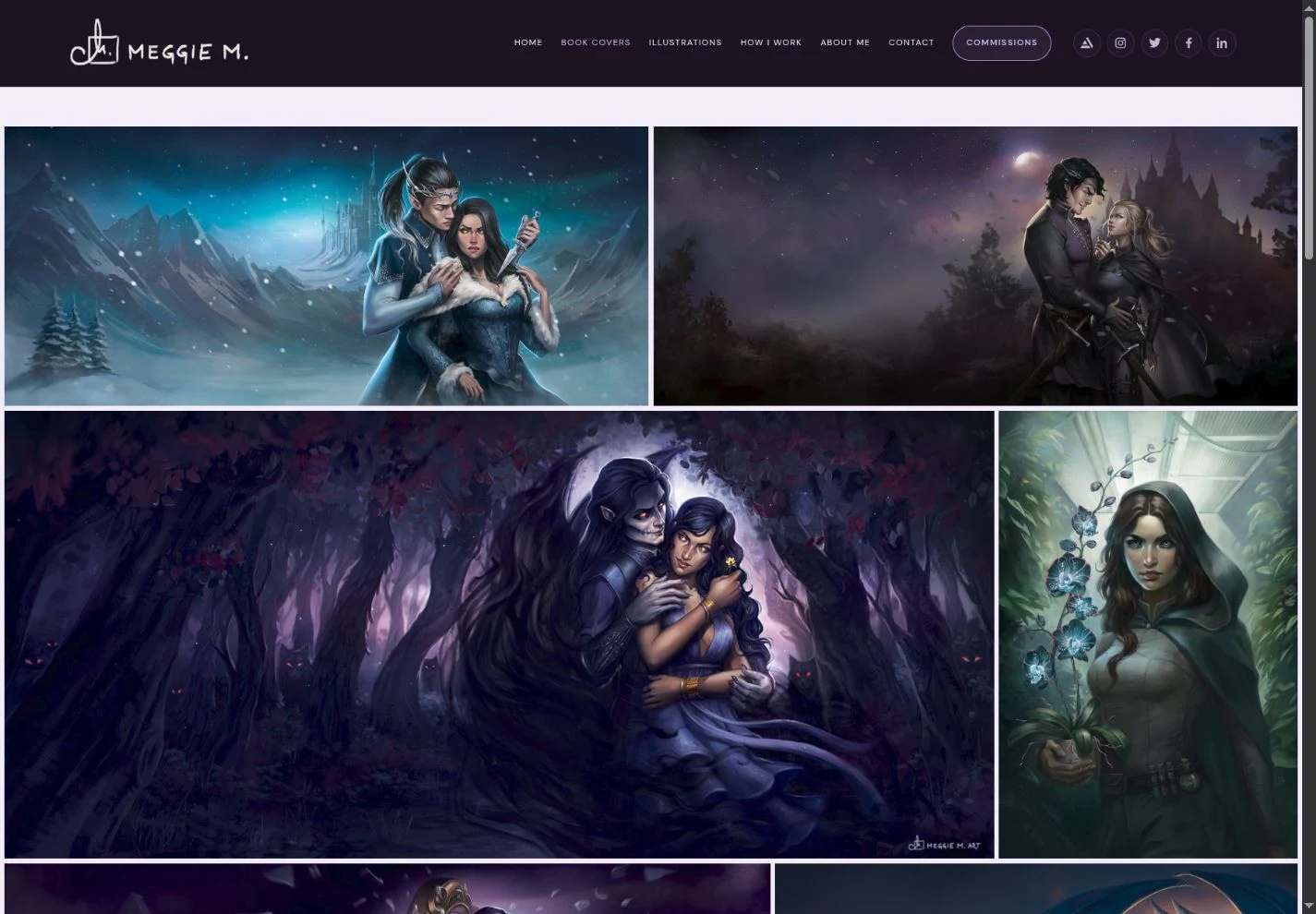
From gallery to project detail
A cover project can include more than its main image: a book presentation, the original illustration, descriptive text, and a process gallery. The detail page brings those materials together, and the lightbox lets visitors inspect an image without losing their place. This gives the illustrator room to present the work in context.
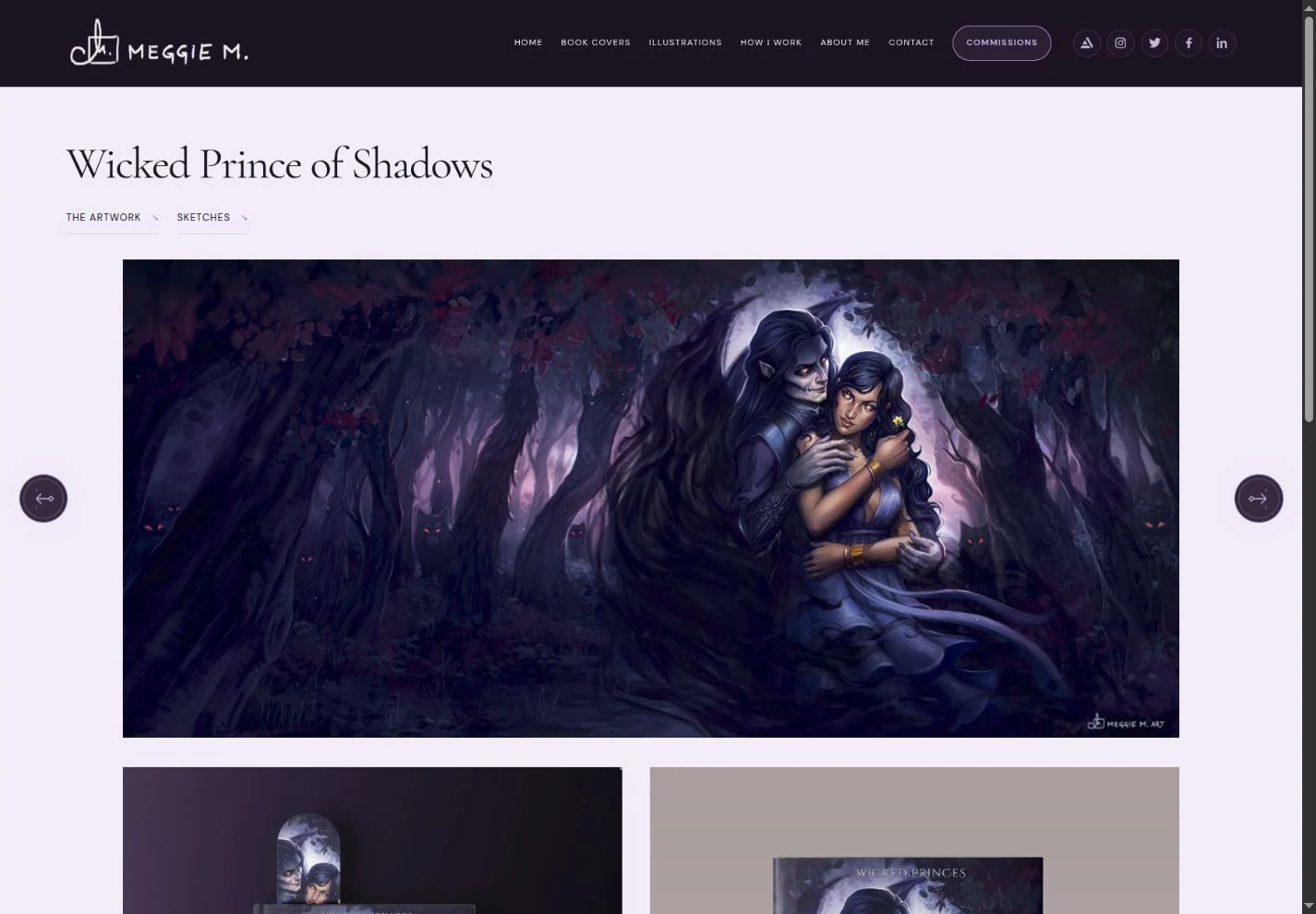
A portfolio she can maintain
Payload CMS manages illustrations, book cover projects, categories, media, and website text. Drafts and publication approval separate work in progress from the public portfolio. The owner can change titles, descriptions, image relationships, ordering, and SEO fields through the admin interface. Published CMS content is the source of truth, so adding artwork does not require editing an array in the code or redeploying the frontend.
Commission information and contact
The commissions page explains the types of work available, starting prices, and how to get in touch. Public contact uses email, social links, and the illustrator's Google Forms enquiry link. The contact and commissions pages share these links so prospective clients can reach her through the channels she maintains.
Images, discovery, and delivery
The application uses Next.js, React, TypeScript, and Payload CMS with PostgreSQL. Media processing produces responsive image variants, with WebP and AVIF delivery supported by Next.js. Page metadata, canonical URLs, structured artwork data, and sitemaps help describe published work. Legacy WordPress URL mappings preserve routes into the new website. The application is deployed on Vercel, with Neon PostgreSQL and S3-compatible media storage.
What the project demonstrates
This is an independent project for a real user with an ongoing content workflow. The work extends from understanding how she presents and maintains her portfolio to building the galleries, configuring the CMS, and deploying the application. My responsibility is to make the website support her illustration work and remain manageable as new projects are added.